Two Menu Staples, Two Completely Different Cooking Methods
Walk up to the counter at Mediterranean Grill House and the menu offers both shawarma and kabob in multiple forms — wraps, bowls, platters. If you’ve never ordered either, the names alone don’t tell you much. Here’s the actual difference, and why it matters for what you order.
What Is Shawarma?
Shawarma starts as a stack. Thin layers of marinated meat — chicken, beef, or lamb depending on the kitchen — are stacked onto a vertical spit and slow-roasted, the outside layer cooking and crisping while the spit rotates, basting the meat in its own juices. As the outer layer finishes, it gets shaved off in thin slices, and the next layer takes its turn.
This method is what gives shawarma its texture: parts crisp and caramelized, parts tender and juicy, all in the same bite. The marinade is typically built around a blend of warm spices — cumin, paprika, garlic, sometimes a touch of cinnamon or allspice — and the meat sits in it long enough to actually take on the flavor, not just sit on the surface.
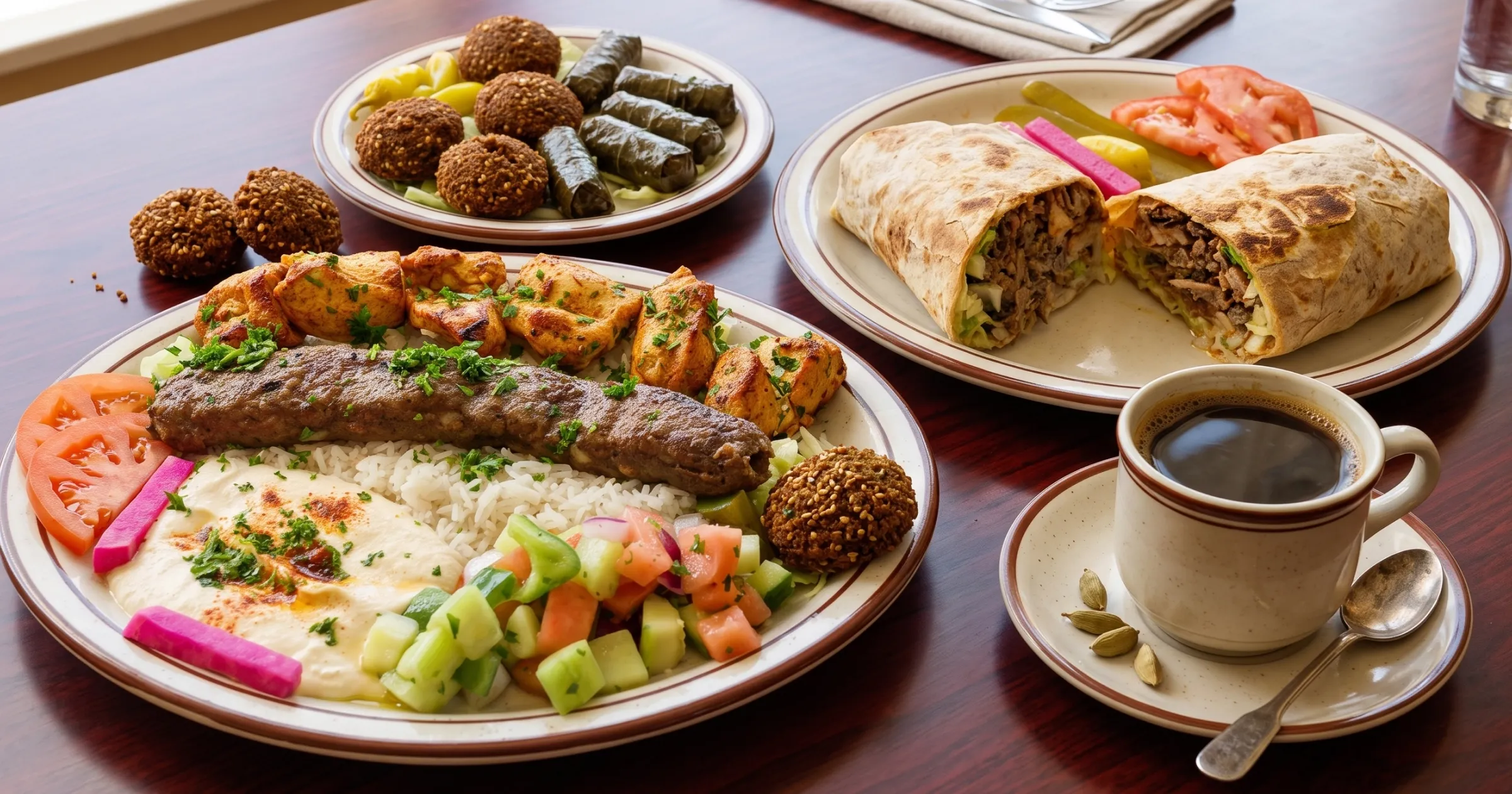
At Mediterranean Grill House, chicken shawarma is the most frequently praised version on the menu, and it’s available as a wrap (rolled in pita with house sauces) or as a platter over rice with sides. The wrap is the faster, handheld version — the one most lunch-break customers order. The platter is the version for when you want a full sit-down meal.
What Is a Kabob?
Kabob (also spelled kebab) is a different cooking method entirely. Instead of stacking and shaving, kabob meat is cut into pieces — or, in the case of kofta, ground and seasoned — then skewered and grilled directly over open flame.
There are two broad styles worth knowing:
Cubed kabob — chunks of marinated meat threaded onto a skewer and grilled, picking up char and smoke directly from the flame. This is the more familiar “kebab” image most people have in mind.
Kofta kebab — ground meat (usually beef) mixed with onion, herbs, and spices, then shaped onto a skewer before grilling. The texture is completely different from cubed kabob: denser, more uniformly seasoned throughout since the spices are mixed directly into the meat rather than just coating the surface. Mediterranean Grill House’s kofta kebab platter is one of the standout orders on the menu — rich, herbaceous, and grilled with real char.
Where shawarma’s flavor comes from the marinade and the slow stack-roasting process, kabob’s flavor comes from direct contact with open flame. That char is the entire point.
So Which Should You Order?
There’s no wrong answer, but here’s a practical way to decide:
Order shawarma if you want something fast, handheld, and ready to eat on the move — the wrap format is built for a lunch break or a quick bite. It’s also the better choice if you want maximum tenderness; the stacking-and-shaving method produces a softer bite than a grilled skewer.
Order kabob if you want a sit-down meal that feels like more of an occasion, or if you specifically want the smoky, charred flavor that only direct-flame grilling produces. The kofta kebab platter, in particular, is the order for someone who wants a heartier, more intensely seasoned plate.
Order both if you’re feeding a group or you simply can’t decide — a mixed platter lets you compare them side by side, which is honestly the best way to understand the difference in the first place.
Both Are Halal, Both Are Fresh Daily
Mediterranean Grill House prepares both shawarma and kabob fresh daily, and both are halal. Whichever you choose, you’re getting the same kitchen discipline behind it — house-made hummus, tahini, and labneh on the side, fresh pita, and the same family recipe approach that’s been running on Castro Street since 1973.
A Quick Word on “Kebab” vs. “Kabob” vs. “Kebob”
If you’ve seen all three spellings and wondered whether they mean different things, they don’t — they’re transliteration variants of the same Middle Eastern and South Asian word for skewered, grilled meat. “Kabob” is common in Persian-influenced spelling, “kebab” is the more widespread Levantine and Turkish spelling, and “kebob” shows up occasionally as a third variant. Menus vary by restaurant and regional tradition, not by dish. At Mediterranean Grill House, the spelling on the menu is “kabob,” but it’s the same open-flame, skewered cooking method described above regardless of which spelling you grew up with.
Where Shawarma and Kabob Come From
Both dishes trace back centuries across the Eastern Mediterranean, the Levant, and the broader Middle East, though they developed along different tracks. Vertical spit-roasting — the technique behind shawarma — has roots in the Ottoman Empire, where döner kebab (literally “rotating kebab”) was being made well over a century ago, eventually spreading and adapting into the Levantine shawarma most American diners know today. Skewer-grilling, the technique behind kabob, is older still and shows up across Persian, Turkish, and Levantine cooking traditions in slightly different forms — different spice blends, different cuts of meat, different regional names for the same basic idea: meat, fire, and a stick.
What’s interesting is that both methods solve the same basic problem — how do you cook meat evenly without an oven — using opposite strategies. Shawarma rotates the meat continuously past a fixed heat source. Kabob holds the meat fixed and exposes it directly to flame. Understanding that distinction makes it easier to taste the difference, too: shawarma’s texture is built in layers from the slow rotation, while kabob’s char is built in a single direct pass over the fire.
Order Online or Visit Castro Street
Try them both. Order online at online-ordering.innowi.com/branch/medgrill, or visit Mediterranean Grill House at 650 Castro St, Suite 110, Mountain View, CA 94041. Phone: (650) 625-9990.
Q&A Pairs
Q1: Is shawarma the same as a kabob?
A1: No — shawarma is meat stacked on a vertical spit, slow-roasted, and shaved to order, while kabob is meat (cubed or ground, as in kofta) skewered and grilled directly over flame. Different cooking methods, different textures and flavors.
Q2: Which is spicier, shawarma or kabob?
A2: Neither is inherently spicier — both rely on warm Mediterranean spices rather than heat. Shawarma’s flavor comes from its marinade; kofta kebab’s flavor comes from spices mixed directly into the ground meat plus the char from grilling.
Q3: Can I order a combination of shawarma and kabob at Mediterranean Grill House?
A3: Yes — ask about a mixed platter when ordering online or in person, or simply order both separately to compare. Both are halal and prepared fresh daily.